Every Type of Car Paint Protection Explained: Wax, Sealants, Ceramic Coatings & Paint Protection Film
From a quick spray wax to professional-grade paint protection film, discover what actually protects your vehicle, how long each option lasts, and which solution makes the most sense for your driving and washing habits.
Your vehicle’s exterior is constantly exposed to things that can damage its appearance: UV radiation, road grime, bird droppings, tree sap, bug splatter, hard water, road salt, chemical contaminants, and everyday wear. Over time, these elements can deteriorate your vehicle’s finish, reduce its gloss, and leave behind permanent staining, etching, and physical damage.
Fortunately, there are several ways to protect automotive paint. The challenge is understanding what each product actually does, how much protection it provides, and which option makes sense for your lifestyle.
At Alex’s Detailing in Stockton, California, we believe choosing the right protection starts with understanding how you use and maintain your vehicle. A driver who hand-washes a weekend sports car has very different needs from someone who drives a daily commuter through an automatic car wash several times a month.
In this guide, we will break down the major types of exterior vehicle protection, explain their strengths and limitations, compare their maintenance requirements, and help you determine which option is best for your vehicle.
Understanding Your Vehicle's Factory Paint Protection
Before discussing aftermarket protection, it helps to understand what you are protecting.
Most modern vehicles have a multi-layer paint system consisting of:
- E-coat: A corrosion-resistant primer applied to the metal body during manufacturing.
- Primer: Helps promote paint adhesion, improve uniformity, and provide additional protection.
- Basecoat: The layer that provides the vehicle's actual color, metallic appearance, or other finish characteristics.
- Clear coat: The transparent outer layer that provides gloss and helps protect the color coat from UV exposure, chemicals, and minor environmental damage.
The clear coat is the surface that most automotive waxes, paint sealants, and ceramic coatings are designed to protect.
However, factory clear coat is not indestructible. Improper washing, abrasive contact, chemical exposure, and environmental contamination can gradually degrade its appearance.
Aftermarket paint protection products add another layer of defense, but not all protection products work the same way. Some create a sacrificial layer that helps protect against environmental contamination, while others provide a physical barrier against impacts and abrasion.
That distinction is important when deciding how much protection your vehicle actually needs.
1. Traditional Carnauba Paste Wax
Best for: Enthusiasts who enjoy hand-washing their vehicles, appreciate a traditional warm-looking finish, and do not mind frequent reapplication.
Traditional carnauba paste wax is one of the oldest and most recognizable forms of automotive paint protection.
Carnauba wax is derived from the leaves of the carnauba palm tree. It is commonly blended with other waxes, oils, solvents, and additives to create a product that can be applied to automotive paint.
Its primary benefits include:
- Enhancing gloss and visual depth.
- Adding a sacrificial layer between the clear coat and environmental contaminants.
- Providing water beading and some water-shedding properties.
- Making routine cleaning easier while the wax remains effective.
- Offering an inexpensive way to maintain a vehicle's appearance.
Carnauba wax is especially popular among automotive enthusiasts who enjoy maintaining their vehicles by hand. Some people also prefer the appearance of traditional wax because of the warm, rich finish it can provide.
How long does it last?
Depending on the formulation, preparation, application, washing frequency, and environmental exposure, traditional carnauba wax may provide protection for several weeks to a few months.
The downside is that it gradually wears away through washing, heat, detergents, and environmental exposure. It requires regular reapplication to maintain consistent protection.
Our recommendation: Paste wax is a good option for someone who enjoys maintaining their vehicle and wants an affordable way to enhance its appearance. It is not the best choice for someone looking for long-term protection with minimal maintenance.
2. Liquid Wax
Best for: Vehicle owners who want the appearance and benefits of traditional wax with easier application.
Liquid wax products are designed to provide many of the same benefits as paste wax while being easier to spread and remove.
Depending on the formula, liquid wax may contain carnauba, synthetic polymers, or a combination of protective ingredients.
Advantages include:
- Easier application than many traditional paste waxes.
- Good gloss enhancement.
- Water-beading properties.
- An affordable maintenance option.
- Compatibility with many common automotive paint finishes.
Liquid wax is often a practical choice for vehicle owners who want to protect their paint without investing in a professional coating.
However, durability varies considerably between products. Some liquid waxes are primarily cosmetic, while others contain synthetic ingredients that improve their resistance to washing and environmental exposure.
Our recommendation: Liquid wax is a practical middle ground for someone who wants traditional paint protection but prefers a quicker application process.
3. Spray Wax
Best for: Quick maintenance, temporary gloss enhancement, and vehicle owners who want an easy-to-use protective product.
Spray wax is one of the easiest exterior protection products to apply. Most products can be sprayed onto a clean surface and wiped away with a microfiber towel.
Spray waxes are commonly used as:
- A quick protective treatment after washing.
- A gloss-enhancing maintenance product.
- A temporary water-beading booster.
- A way to refresh an existing wax or sealant.
The convenience comes with a tradeoff: spray wax generally provides less durability than traditional paste wax or more substantial synthetic sealants.
Some spray waxes contain actual wax ingredients, while others rely primarily on synthetic polymers. Product formulations vary, so the label matters.
Our recommendation: Spray wax is a great option for someone who wants a quick, inexpensive way to refresh their vehicle's appearance between more substantial protection applications. It should not be confused with a long-term ceramic coating.
4. Synthetic Paint Sealants
Best for: Daily drivers, vehicle owners who want longer-lasting protection than traditional wax, and people who prefer straightforward maintenance.
Synthetic paint sealants use engineered polymers and other protective ingredients to create a layer over the vehicle's clear coat.
Unlike traditional carnauba wax, synthetic sealants are formulated to provide improved durability and resistance to environmental exposure.
Common benefits include:
- Longer-lasting protection than many traditional waxes.
- Good water-beading and water-shedding characteristics.
- Gloss enhancement.
- Easier application than many traditional waxes.
- A smooth surface that can make routine washing easier.
Synthetic sealants are available in liquid, paste, and spray formulations.
How long do they last?
Depending on the product and maintenance routine, synthetic sealants may last several months. Some advanced formulations advertise longer durability, but real-world performance depends on how the vehicle is washed, stored, and driven.
Our recommendation: Synthetic paint sealants are an excellent choice for someone who wants a balance between cost, convenience, and protection without committing to a professional ceramic coating.
5. Ceramic Sealants and SiO2 Spray Sealants
Best for: Daily drivers, frequent maintenance customers, and vehicle owners who want enhanced water behavior and convenient protection without the commitment of a professional ceramic coating.
Ceramic sealants have become increasingly popular because they offer many of the user-friendly characteristics associated with ceramic coatings while being much easier to apply.
These products commonly contain silicon dioxide (SiO2), silane-based ingredients, siloxanes, or other silicon-based chemistry designed to improve surface protection and water behavior.
Ceramic sealants are commonly available as:
- Spray-on, wipe-off products.
- Wet-application products used during the rinse process.
- Drying aids that provide additional protection while drying.
- Liquid sealants applied by hand or machine.
Their primary benefits include:
- Strong water-beading characteristics.
- Improved water shedding.
- Enhanced gloss and slickness.
- Easier removal of everyday dirt and grime.
- Convenient application.
- Less maintenance than traditional wax in many cases.
However, ceramic sealants should not be confused with professional ceramic coatings. Although some spray products advertise impressive durability, they generally do not provide the same type of bonded, long-term protective layer as a professionally installed coating.
How long do they last?
Depending on the formulation and conditions, ceramic sealants may last several weeks to several months. Some advanced products advertise longer performance.
Our recommendation: Ceramic sealants are an excellent option for customers who want better-than-basic protection but do not necessarily need a multi-year ceramic coating.
They are also useful for maintaining certain existing protective systems, provided the product is compatible with the underlying coating or film.
6. Professional Ceramic Coatings
Best for: Vehicle owners who want long-term protection, enhanced gloss, easier maintenance, and are willing to maintain their vehicle properly.
Professional ceramic coatings represent a significant step beyond traditional waxes and spray sealants.
These coatings use specialized chemistry designed to bond to the properly prepared vehicle surface and create a durable protective layer.
Many automotive ceramic coatings use silicon-based chemistry, including SiO2-based formulations. Other products may incorporate different materials or additives to achieve specific performance characteristics.
Once properly installed and cured, a professional ceramic coating can provide:
- Long-term resistance to many environmental contaminants.
- Improved resistance to chemical exposure within the coating's tested limits.
- Excellent water-beading and water-shedding properties.
- Enhanced gloss and visual depth.
- A slicker surface that can make washing easier.
- Reduced adhesion of many types of dirt and grime.
- Less frequent need for traditional wax applications.
One of the biggest advantages of ceramic coatings is their ability to make routine vehicle maintenance easier. Contaminants generally have a harder time bonding to a properly maintained coated surface, making them easier to remove during a normal wash.
However, ceramic coatings are not magic shields.
What Ceramic Coatings Do Not Protect Against
This is one of the biggest misconceptions in the detailing industry.
A ceramic coating does not make your vehicle scratch-proof, rock-chip-proof, or completely resistant to environmental damage.
A ceramic coating is not designed to absorb the impact of rocks, gravel, or road debris. It will not prevent a shopping cart from damaging your door, and it will not stop a deep scratch from reaching the paint.
Although coatings can offer some resistance to light surface marring and chemical exposure, they are not a replacement for paint protection film.
Ceramic coatings also do not eliminate water spots. Mineral deposits from sprinklers, hard water, and rainwater can still accumulate on coated paint and potentially cause etching if left untreated.
How Long Does a Ceramic Coating Last?
Ceramic coating durability depends on several factors:
- The specific coating formulation.
- Surface preparation and installation quality.
- Environmental exposure.
- How frequently the vehicle is washed.
- The chemicals and wash methods used.
- Whether the coating receives appropriate maintenance.
Professional coatings are available with advertised durability ranging from approximately one year to several years and beyond.
It is important to understand that advertised durability is not a guarantee of identical real-world performance for every vehicle. A vehicle that is garaged, hand-washed, and properly maintained will generally have a better opportunity to achieve its coating's intended service life than one exposed to constant environmental stress and aggressive washing.
Why Paint Preparation Matters
A ceramic coating does not hide existing scratches, swirl marks, oxidation, or paint defects.
In fact, because coatings enhance gloss and clarity, imperfections may become more noticeable once the coating is installed.
That is why professional ceramic coating installations typically begin with a thorough exterior cleaning, chemical and mechanical decontamination, and an evaluation of the paint.
Depending on the vehicle's condition, paint correction may be recommended before coating installation.
Paint correction removes or reduces certain defects in the clear coat through controlled machine polishing. This creates a cleaner, more uniform surface for the coating and improves the final appearance.
At Alex's Detailing, we offer paint correction and ceramic coating services for customers throughout Stockton and surrounding cities.
7. CCI Professional Ceramic Coatings
Best for: Vehicle owners who want professional-grade, long-term paint protection, exceptional gloss, strong chemical resistance, and easier vehicle maintenance.
At Alex’s Detailing, we use professional ceramic coating products from Ceramic Coating Incorporated (CCI). CCI develops coatings specifically for professional detailers, with an emphasis on consistent performance, efficient application, and reliable results.
One of the standout characteristics of CCI's ceramic coating technology is its combination of chemical resistance, high gloss, and an exceptionally slick surface.
CCI's flagship Advance Coating features a specialized sediment-suspension formulation designed to deliver:
- Excellent chemical resistance: Helps protect automotive surfaces against exposure to many common environmental and chemical contaminants.
- Ultra-high gloss: Enhances the paint's clarity, depth, and overall appearance.
- Exceptional surface slickness: Creates a smooth surface that helps reduce the adhesion of dirt and grime, making routine cleaning easier.
- Long-term protection: Formulated to provide up to 3 or 5+ years of protection when properly installed and maintained.
- Versatile application: Designed for use on multiple vehicle surfaces, following the manufacturer's preparation and application instructions.
Unlike traditional waxes and spray sealants that gradually wear away, professional ceramic coatings are designed to bond to properly prepared surfaces and provide more durable protection.
Why We Choose CCI
We believe the coating itself is only part of the equation. Proper surface preparation, application technique, and ongoing maintenance are equally important to achieving the best possible results.
CCI's professional product lineup and detailer-focused approach align with our commitment to delivering consistent, high-quality ceramic coating installations.
It's also important to understand that ceramic coatings are not scratch-proof or rock-chip-proof. They are designed to provide chemical and environmental protection, improve surface characteristics, and make routine maintenance easier. For physical impact protection against rocks and road debris, paint protection film (PPF) remains the better choice.
Our recommendation: For vehicle owners who hand-wash their vehicles or use touchless washes and want long-term protection with excellent gloss and easier maintenance, a professionally installed CCI ceramic coating is an excellent option. As with any ceramic coating, proper washing and maintenance are essential to achieving its intended service life.
8. Paint Protection Film (PPF)
Best for: New vehicles, luxury vehicles, sports cars, highway commuters, and anyone who wants physical protection against rock chips and road debris.
Paint protection film, commonly called PPF or clear bra, is one of the most effective ways to protect automotive paint against physical damage.
Unlike waxes, sealants, and ceramic coatings, PPF is an actual physical film installed over the painted surface.
Modern paint protection films are typically constructed using advanced thermoplastic polyurethane (TPU) materials. They are engineered to absorb impacts and help prevent damage to the paint underneath.
PPF is especially valuable on areas of a vehicle that are exposed to road debris.
Common installation areas include:
- Front bumper.
- Hood.
- Front fenders.
- Side mirrors.
- Headlights, where the selected film is approved for that application.
- Door edges and door cups.
- Rocker panels.
- Rear bumper loading areas.
- Full vehicle exterior.
What Does Paint Protection Film Protect Against?
Depending on the film and installation, PPF can help protect against:
- Rock chips.
- Small road-debris impacts.
- Light scratches and abrasions.
- Minor surface scuffs.
- Bug splatter and environmental contamination.
- Certain stains and chemical exposure.
Many premium PPF products also feature self-healing topcoats.
Self-healing film can reduce the appearance of certain light surface scratches and swirl marks when exposed to heat from sunlight or another manufacturer-approved heat source.
This does not mean the film can repair deep cuts, punctures, or damage that penetrates through the material.
Clear PPF vs. Colored PPF
Traditional PPF is transparent and designed to preserve the original appearance of the vehicle.
However, colored and finish-changing PPF products are also available. These films can change the appearance of a vehicle while providing physical protection.
Depending on the product, options may include:
- Gloss finishes.
- Matte or satin finishes.
- Color-changing finishes.
- Specialty finishes.
Colored PPF can be an alternative to vinyl wrapping when the owner wants to change the vehicle's appearance while adding the protective characteristics of a physical film.
How Long Does PPF Last?
Premium paint protection films may have manufacturer warranties extending several years, with some products advertising warranties around 10 years.
Actual service life depends on the specific film, installation quality, climate, exposure, maintenance, and warranty conditions.
What PPF Does Not Do
PPF is not indestructible. Severe impacts, deep cuts, vandalism, and accidents can still damage the film and potentially the paint underneath.
It is also important to understand that PPF protects only the areas where it is installed. A partial-front installation does not protect the entire vehicle.
Our recommendation: If your primary concern is preventing rock chips and physical damage, PPF is generally the best option. For maximum protection, some vehicle owners choose to combine PPF with a ceramic coating applied over the film and remaining exposed painted surfaces, provided both products are compatible.
9. Vinyl Wraps
Best for: Vehicle owners who want to change the color or appearance of their vehicle while providing some surface protection.
Vinyl wraps are commonly used to change a vehicle's appearance without permanently repainting it.
They are available in a wide range of colors, textures, and finishes, including gloss, matte, satin, metallic, and specialty designs.
Vinyl wrap can provide a barrier against some minor surface abrasion, UV exposure, and environmental contamination. However, its primary purpose is generally appearance customization rather than maximum paint protection.
Compared with modern TPU paint protection film, vinyl wrap generally offers less impact protection against rock chips and road debris.
A vinyl wrap should not be considered an equivalent substitute for PPF.
Our recommendation: Choose vinyl wrap when changing the vehicle's appearance is the priority. Choose PPF when protecting the original paint from physical damage is the priority.
10. Ceramic Coatings for Wheels, Glass, and Exterior Trim
Best for: Vehicle owners who want a more complete exterior protection package.
Not every exterior surface is painted metal. Wheels, glass, plastic trim, and other materials have different characteristics and benefit from products designed specifically for those surfaces.
Wheel Ceramic Coatings
Brake dust, road grime, and high temperatures make wheels particularly difficult to maintain.
Dedicated wheel coatings are formulated for the materials and conditions found on automotive wheels. They can help reduce the adhesion of brake dust and make routine cleaning easier.
A wheel coating does not prevent all brake dust accumulation, but it can make the cleaning process considerably more manageable.
Glass Coatings
Glass coatings create a hydrophobic surface that encourages water to bead and move away from the windshield and windows.
Benefits may include:
- Improved water shedding.
- Better visibility during certain rainy driving conditions.
- Easier removal of some road grime and contaminants.
- Reduced bonding of certain contaminants.
Glass coatings do not replace windshield wipers, and their performance depends on the product, application, and maintenance.
Exterior Trim Coatings
Unpainted plastic trim can fade and lose its original appearance after prolonged exposure to sunlight and environmental conditions.
Dedicated trim coatings and protectants are designed to restore or preserve the appearance of exterior plastics while providing additional resistance to environmental exposure.
It is important to use products formulated for the specific material. A product intended for painted surfaces may not be appropriate for textured plastic or rubber trim.
Comparing the Different Types of Exterior Protection
The following table provides a general comparison. Actual durability and performance vary by product, installation, environment, and maintenance.
Protection TypeTypical Protection FocusGeneral DurabilityPaste carnauba waxGloss, water repellency, sacrificial layerWeeks to monthsLiquid waxGloss and basic environmental protectionWeeks to monthsSpray waxQuick gloss and water-beading enhancementWeeksSynthetic paint sealantLonger-lasting surface protectionSeveral monthsCeramic sealantWater behavior, gloss, easier maintenanceWeeks to monthsProfessional ceramic coatingLong-term chemical and environmental protectionApproximately 1–5+ years, depending on productGraphene-enhanced coatingSimilar coating protection with formulation-specific featuresProduct dependentPaint protection filmPhysical protection against chips and abrasionSeveral yearsVinyl wrapAppearance change and limited surface protectionSeveral years, product dependentWheel coatingEasier wheel cleaning and contamination resistanceProduct dependentGlass coatingWater shedding and easier glass maintenanceProduct dependentTrim coatingExterior plastic protection and appearance preservationProduct dependent
These are general ranges rather than guaranteed service lives. Always review the specific manufacturer's specifications and care requirements.
Which Type of Protection Is Best for Your Vehicle?
The best protection is not necessarily the most expensive product. It is the protection that matches your driving habits, washing routine, budget, and expectations.
Here are some common situations we encounter and what we would generally recommend.
Scenario 1: You Primarily Use Drive-Through Brush Car Washes
Recommended protection: Synthetic sealant, ceramic sealant, or traditional wax with frequent reapplication.
If your primary method of washing is an automatic tunnel car wash with rotating brushes or contact-style wash material, we would generally recommend staying with a more affordable, frequently renewable protection product.
Why?
Contact-style automatic washes repeatedly expose the vehicle to mechanical abrasion. Wash media can also carry dirt and grit from previous vehicles. Over time, this can create swirl marks, scratches, and a dull appearance.
Even though a ceramic coating offers more durability than traditional wax, it does not make the paint immune to abrasion. Repeated contact washing can wear down surface characteristics, cause marring, and reduce the coating's performance over time. A coating may remain on the surface while its water behavior and appearance deteriorate.
A traditional wax or synthetic sealant is generally less expensive to replace and can be reapplied as needed.
An important distinction: Wax and sealants do not prevent brush-induced scratches either. If you continue using contact-style automatic washes, the paint can still accumulate damage regardless of the protection product.
If you want to maintain the appearance of your vehicle, consider switching to a careful hand wash or a properly maintained touchless wash when appropriate.
Scenario 2: You Use Touchless Automatic Car Washes
Recommended protection: Ceramic sealant or professional ceramic coating, depending on your maintenance habits.
Touchless car washes avoid direct mechanical contact with the paint. Instead, they use high-pressure water and cleaning chemicals to remove dirt and grime.
This eliminates much of the mechanical abrasion associated with brush washes, but touchless systems have their own limitations.
Some use stronger alkaline or acidic cleaning chemicals to compensate for the lack of physical contact. Repeated exposure to aggressive chemicals can reduce the performance of waxes, sealants, and ceramic coatings.
Touchless washes may also leave behind road film or stubborn contamination because they do not physically agitate the surface.
If you use touchless washes regularly, a ceramic sealant can be a practical option because it is relatively easy to refresh. A professional ceramic coating may also be appropriate if you are willing to follow the coating manufacturer's maintenance recommendations.
Scenario 3: You Hand-Wash Your Vehicle Regularly
Recommended protection: Professional ceramic coating.
If you enjoy maintaining your vehicle and are willing to use proper washing techniques, a professional ceramic coating can be an excellent investment.
Proper hand washing helps minimize unnecessary abrasion while allowing the coating to perform as intended.
A coated vehicle is generally easier to clean, and routine maintenance can be more convenient.
For someone who takes pride in keeping their vehicle clean, a professional ceramic coating can provide an excellent combination of appearance, convenience, and long-term protection.
Scenario 4: You Drive a Lot of Highway Miles
Recommended protection: Paint protection film, potentially combined with ceramic coating.
Highway driving exposes your vehicle to rocks, gravel, sand, and other road debris.
The front bumper, hood, fenders, and mirrors are particularly vulnerable to rock chips.
A ceramic coating will not stop a rock from chipping your paint. Paint protection film is specifically designed to absorb and distribute the energy from many small impacts before they reach the painted surface.
For someone who frequently commutes or travels on highways, we would strongly consider PPF on the vehicle's most vulnerable areas.
A ceramic coating can then be added over the PPF and other exposed painted surfaces to improve cleaning and environmental resistance.
Scenario 5: You Own a New Luxury Vehicle or Sports Car
Recommended protection: Full-front or full-body PPF, with optional ceramic coating.
If you have invested in a new luxury vehicle, exotic car, or sports car, preserving the original paint may be a major priority.
A full-front PPF installation protects the areas most commonly damaged by road debris.
A full-body PPF installation provides a much greater level of physical protection across the vehicle.
Adding a compatible ceramic coating over the film and remaining painted surfaces can provide additional benefits, including water repellency, easier cleaning, and improved resistance to certain contaminants.
This combination offers two different types of protection working together:
- PPF helps protect against physical impacts and abrasion.
- Ceramic coating helps protect against environmental contamination and makes maintenance easier.
Scenario 6: You Park Outside Every Day
Recommended protection: Ceramic coating or a quality sealant, with PPF for impact-prone areas.
Vehicles parked outside are exposed to constant environmental conditions.
In Stockton and throughout California's Central Valley, vehicles can experience intense summer heat, UV exposure, dust, agricultural contaminants, bird droppings, tree sap, and hard water from sprinklers.
A ceramic coating can make routine cleaning easier and provide an additional layer of resistance against many environmental contaminants.
However, coatings do not eliminate the risk of water spotting, chemical etching, or sun-related deterioration. Regular washing and prompt removal of contaminants remain important.
If your vehicle is frequently parked beneath trees or near areas where sap and bird droppings are common, maintaining the surface is just as important as choosing the protection product.
Scenario 7: You Want Affordable Protection and Do Not Mind Reapplying Products
Recommended protection: Traditional wax or synthetic paint sealant.
Not everyone needs a multi-year ceramic coating.
If you enjoy working on your vehicle, do not mind applying protection several times a year, and want to keep costs down, traditional wax or synthetic sealant can be a perfectly reasonable choice.
The key is consistency. A product that is regularly maintained may be a better fit than a premium coating that is neglected or exposed to improper washing practices.
Scenario 8: You Want the Best Overall Combination of Protection
Recommended protection: Paint protection film in vulnerable areas, combined with a professional ceramic coating.
For vehicle owners who want a comprehensive approach, combining PPF and ceramic coating offers some of the most versatile exterior protection available.
The film provides a physical barrier against many forms of impact damage, while the coating provides additional surface protection and easier maintenance.
This combination is particularly attractive for new vehicles, high-value vehicles, and owners who want to preserve their factory paint for as long as possible.
Why Proper Washing and Maintenance Matter More Than You Think
Regardless of which protection product you choose, your washing routine has a tremendous impact on its performance and longevity.
Even the most expensive ceramic coating or paint protection film cannot compensate for consistently poor maintenance.
Here are some important habits we recommend:
- Wash regularly: Do not allow heavy dirt, road film, or environmental contamination to accumulate for extended periods.
- Use appropriate automotive shampoo: Choose a quality product compatible with your protection system.
- Use clean microfiber wash media: Dirty wash mitts and towels can introduce scratches and swirl marks.
- Avoid automatic brush washes: Repeated mechanical contact can damage the appearance of paint, coatings, and PPF.
- Dry the vehicle properly: Allowing hard water to evaporate on the surface can leave mineral deposits and water spots.
- Remove bird droppings and bug splatter promptly: These contaminants can etch or stain automotive surfaces, particularly in hot weather.
- Avoid washing in direct sunlight: Hot panels and rapid evaporation can make cleaning more difficult and increase the risk of water spotting.
- Follow manufacturer recommendations: Different coatings and films have different care requirements.
Can You Wax a Ceramic-Coated Vehicle?
This is a common question.
Generally, traditional wax is unnecessary on a professionally ceramic-coated vehicle. Applying wax or another sealant over a coating may change its surface behavior, mask its natural water characteristics, or interfere with the performance of certain maintenance systems.
Instead, use products specifically approved or recommended for the coating installed on your vehicle.
Some ceramic coatings have dedicated maintenance sprays and compatible SiO2 boosters designed to refresh water behavior without compromising the coating system.
Does a Ceramic Coating Need to Be Reapplied When It Stops Beading Water?
Not necessarily.
Reduced water beading does not automatically mean a ceramic coating has failed.
Road film, mineral deposits, and other bonded contaminants can accumulate on the coating's surface and interfere with its water behavior.
A proper decontamination and maintenance process may restore some of the coating's original performance.
If the coating continues to underperform after appropriate maintenance, it may be time for a professional inspection to determine whether it has degraded or reached the end of its useful life.
Professional Paint Protection in Stockton, California
Choosing the right exterior protection is about more than selecting a product with the longest advertised lifespan. It is about understanding what your vehicle needs and matching the protection to the way you actually drive, wash, and maintain it.
At Alex's Detailing, we help vehicle owners throughout Stockton and surrounding cities make informed decisions about exterior protection.
Our services include:
- Professional ceramic coatings.
- Paint correction and polishing.
- Ceramic sealant applications.
- Exterior detailing and decontamination.
- RV ceramic coatings.
- Boat detailing and protection.
Whether you are looking for an affordable way to maintain your daily driver or want to invest in a professional ceramic coating for a vehicle you plan to keep for years, we can help you evaluate your options.
We offer free in-person consultations for ceramic coating, paint correction, and other services so we can inspect your vehicle, discuss your goals, and recommend an appropriate solution.
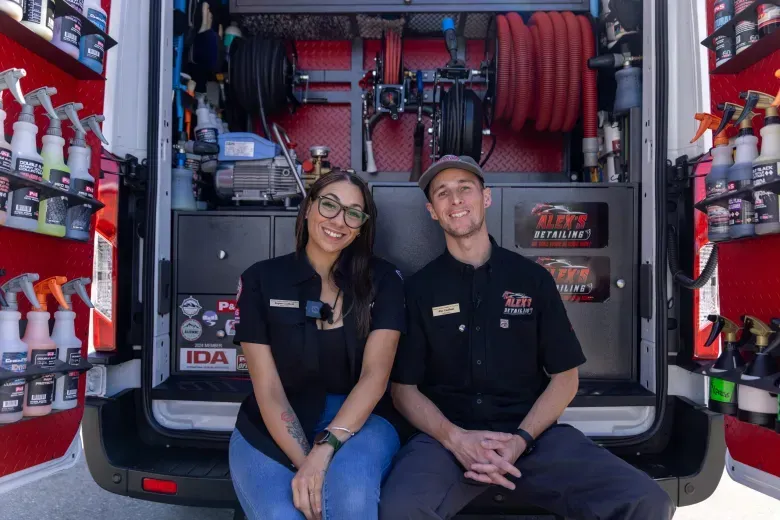
Ready to protect your vehicle's finish? Visit Alex's Detailing or give Alex & Regina a call to schedule your consultation.
Frequently Asked Questions About Vehicle Paint Protection
What is the longest-lasting type of car paint protection?
Paint protection film and professional ceramic coatings are among the longest-lasting aftermarket protection options, but they serve different purposes. PPF provides a physical barrier against rock chips and abrasion, while ceramic coatings provide long-term chemical and environmental resistance. Their actual service life depends on the product, installation, and maintenance.
Is ceramic coating better than wax?
For long-term protection and reduced maintenance, a professional ceramic coating generally outperforms traditional wax. Wax is less expensive and easier to reapply, making it a practical choice for people who do not mind frequent maintenance. The better option depends on your budget, washing habits, and expectations.
Does ceramic coating prevent rock chips?
No. Ceramic coatings are not designed to absorb the impact of rocks or road debris. Paint protection film is the appropriate product when physical impact protection is the priority.
Can I take a ceramic-coated car through an automatic car wash?
It depends on the type of wash and the coating manufacturer's recommendations. We generally recommend avoiding automatic brush and contact-style washes because repeated mechanical contact can scratch the paint, mar the coating's surface, and reduce its performance. Touchless washes avoid direct contact but may use stronger cleaning chemicals. Proper hand washing is generally the preferred maintenance method.
Is paint protection film better than ceramic coating?
Neither is universally better. They provide different types of protection. PPF is better for preventing rock chips and physical damage, while ceramic coatings are better suited for chemical and environmental resistance, water behavior, and easier maintenance. Many vehicle owners choose to combine both.
Can ceramic coating be applied over paint protection film?
Yes. Many paint protection films are compatible with ceramic coatings designed for film applications. The coating must be appropriate for the specific film, and the manufacturer's installation and maintenance instructions should be followed.
Does ceramic coating make a car scratch-proof?
No. Ceramic coatings can provide some resistance to light surface marring, but they do not prevent scratches from improper washing, physical contact, or sharp objects. PPF provides a much greater level of physical protection.
How often should I apply wax or ceramic sealant?
There is no universal schedule. Reapplication depends on the product formulation, washing frequency, environmental exposure, and the manufacturer's instructions. Monitor the surface and follow the product's recommended maintenance interval rather than relying solely on water beading.
Is ceramic coating worth it on an older vehicle?
It can be. An older vehicle with healthy paint may benefit significantly from paint correction followed by ceramic coating. The important first step is evaluating the condition and thickness of the existing paint. If the clear coat is severely damaged, failing, or too thin for safe correction, a coating may not be the appropriate solution.
Can you put ceramic coating on a vehicle without paint correction?
Yes. Paint correction is not mandatory for every ceramic coating installation. However, coatings do not hide scratches or swirl marks, so applying a coating over imperfect paint will preserve much of the existing appearance. A paint inspection helps determine whether polishing is worthwhile before installation.
What is the best paint protection for a daily driver?
For a daily driver that is hand-washed and properly maintained, a professional ceramic coating is an excellent option. If the vehicle regularly travels on highways or is exposed to rock chips, adding PPF to vulnerable areas provides additional physical protection. For someone who primarily uses automatic brush washes, a more frequently reapplied wax or sealant may be the more practical investment.
Final takeaway: The best vehicle protection is the one that matches your needs. Wax and sealants are affordable and easy to maintain. Ceramic coatings offer longer-term environmental protection and easier cleaning. Paint protection film provides a physical barrier against road debris and impacts. Understanding the differences helps you spend your money on the protection that will actually benefit your vehicle.
If you ever have any question or concerns about protecting your vehicle, how ceramic coatings work or just generally unsure of what's right for your circumstances? Give Alex & Regina a call to setup a free in person consultation to learn more.